
If you’re trying to make sense of “Home and Living” in an NDIS plan and where NDIS accommodation fits in, you’re not alone. The language can feel like a maze, especially when you’re juggling real-world pressures like finding a safe place to live, keeping a tenancy stable, or supporting a family member whose needs are changing.
A useful way to think about Home and Living is this:
• The housing system (private rentals, community housing, public housing) is mainly responsible for the home itself.
• The NDIS is mainly responsible for supports you need because of disability to live as independently and safely as possible where you live.
This guide breaks down who does what, what’s typically funded, where the boundaries sit, and how common Home and Living pathways like SIL, SDA and ILO fit together, using practical examples relevant to Melbourne.
What “Home and Living” Means in Practice
“Home and Living” is a category that covers supports that help you live in your home and participate in everyday life. It can include support with daily activities, personal care, building independent living skills, and sometimes supports that help you find and keep suitable housing.
It’s not a promise that the NDIS will provide a house, pay rent, or solve the rental market. Instead, it’s about what supports are “reasonable and necessary” for you as an NDIS participant in your living situation.
If you want a clear, authoritative reference that explains what’s generally funded (and what isn’t), the NDIS overview is a good starting point: What home and living supports the NDIS funds.
Quick answer
Home and Living supports are the disability-related supports that help you live safely and independently where you live. The NDIS typically funds supports (like assistance with daily living, skill-building, and sometimes help to find and maintain housing), not ordinary living costs like rent and groceries.
The “Who Does What” Map
A lot of stress comes from blurred roles. When responsibilities are clear, it’s easier to plan, advocate, and avoid gaps.
The participant (or nominee): steering the ship
You (or your nominee) are the decision-maker. Your role is to set goals, describe your support needs, and choose providers that fit your preferences.
In real terms, participants often do things like:
• Describe what a “good day at home” looks like
• Identify risks (falls, medication errors, isolation, unsafe visitors, tenancy stress)
• Keep track of what’s working and what isn’t
• Bring evidence to planning meetings (reports, incident notes, OT recommendations)
The NDIS: funding disability-related supports
The NDIS funds supports that relate to your disability and meet the “reasonable and necessary” criteria. It can fund supports delivered in your home, in the community, or (depending on the pathway) across multiple settings.
The NDIS generally does not fund:
• Rent or mortgage
• Standard utility bills and everyday groceries
• General maintenance that isn’t disability-related
There are nuanced exceptions in the broader Home and Living ecosystem, such as Specialist Disability Accommodation (SDA) for eligible participants, but that’s not the same as “NDIS pays rent for everyone”.
The housing system: the home itself
In Melbourne, most people will live in one of these:
• Private rental
• Living with family
• Community housing
• Social/public housing
Each system has its own eligibility rules and processes, and many are not controlled by the NDIS. Even when the NDIS funds support, you may still be dealing with a real estate agent, housing provider, strata, neighbours, and standard tenancy processes.
Support coordinators: navigating and connecting the pieces
A support coordinator (if funded in your plan) helps you understand your plan, connect with appropriate services, coordinate supports, and reduce risk. In Home and Living conversations, they often help with:
• Comparing options (what suits your needs now vs later)
• Coordinating assessments (like OT)
• Gathering evidence for reviews
• Problem-solving when a living situation becomes unstable
They’re not a housing department, and they’re not a landlord. Think of them as the person who helps you line up the right supports and keeps the plan workable.
Providers: delivering the supports
Providers deliver the supports funded in the plan. Depending on your needs, that might include:
• Daily living support (prompting, supervision, assistance with tasks)
• Personal care supports
• Capacity building (cooking skills, budgeting skills, routines)
• Support in shared living models (like SIL) or flexible individualised models (like ILO)
If you’re trying to connect the “NDIS language” to real-life situations, it can help to read an overview of how NDIS accommodation and tenancy supports can sit alongside Home and Living supports when housing stability is a challenge.
What the NDIS Will and Won’t Fund
A simple way to reduce confusion is to separate supports from the cost of living.
Typically funded: disability-related supports at home
Common examples include:
• Assistance with personal care (showering, dressing, toileting)
• Support with daily routines (meal prep support, prompting, building habits)
• Support to develop skills (shopping skills, cooking skills, household management)
• Support with community access (getting to appointments, social activities)
• Some forms of help to find and maintain housing (where it’s disability-related and appropriate)
Typically not funded: standard living expenses
Common examples include:
• Rent and bond
• Groceries
• Standard electricity, gas, water, and internet bills
• Standard household items unrelated to disability needs
This boundary matters because it changes how you talk about needs in planning meetings. Instead of “I need help paying rent,” it becomes “I need support at home to live safely and maintain my tenancy.”
Q&A: Is rent covered by the NDIS?
No, rent is generally not covered. The NDIS is designed to fund disability-related supports, not everyday living costs. If someone is eligible for SDA, that’s a different pathway relating to specialised housing, but it still doesn’t mean “the NDIS pays rent for everyone”.
SIL, SDA and ILO: How They Fit (and How They Don’t)
These acronyms get thrown around like everyone already understands them. Let’s make them usable.
Supported Independent Living (SIL): supports in a shared home (most commonly)
SIL is a support model for people who need significant help at home, often in a shared living arrangement, where supports can include help with daily tasks and supervision.
What SIL is:
• A funded support arrangement to assist you in your home life
• Often delivered in a shared home, with staff support across the day or overnight
• Designed around what support you need, not just what house is available
What SIL is not:
• It’s not rent
• It’s not groceries
• It’s not automatically “the provider owns the house” (sometimes they might, sometimes they don’t)
Specialist Disability Accommodation (SDA): the housing for eligible participants
SDA relates to the physical housing designed for people with extreme functional impairment or very high support needs. It’s about the home itself meeting specialised design needs.
People often confuse SDA and SIL:
• SDA is the specialist housing (if eligible)
• SIL is the support in the home
You can have:
• SDA without SIL (depending on your needs and supports)
• SIL without SDA (many people do)
• Neither, and still have Home and Living supports
Individualised Living Options (ILO): flexible support arrangements
ILO is an approach that aims to design a living arrangement that suits the person, which can include living alone, with housemates, or with a host arrangement, with supports tailored to the individual.
In practice, ILO conversations often focus on:
• The living situation that best fits your preferences
• The support structure that makes it sustainable
• Reducing “placement” thinking and increasing choice and control
Q&A: Which one should I choose — SIL, SDA or ILO?
It’s less “choose the label” and more “match the model to your support needs and goals.”
• If you need a high level of daily support and supervision, SIL may be relevant.
• If your disability-related needs require specialist housing design and you meet eligibility, SDA may be relevant.
• If you want a more flexible arrangement tailored to you (including living alone with the right supports), ILO may be relevant.
A support coordinator and OT evidence often make these decisions clearer.
Evidence That Helps in Planning Conversations
In Melbourne, housing pressure can make people rush decisions. But Home and Living outcomes are often stronger when you bring specific evidence about support needs rather than broad statements.
Helpful evidence types
• Occupational therapist (OT) assessments (risk, function, recommended supports)
• Behaviour support reports (where relevant)
• Allied health reports (speech pathology, psychology, physiotherapy)
• Incident records (falls, medication errors, absconding, unsafe visitors, conflict)
• Hospital discharge summaries (when housing stability impacts health)
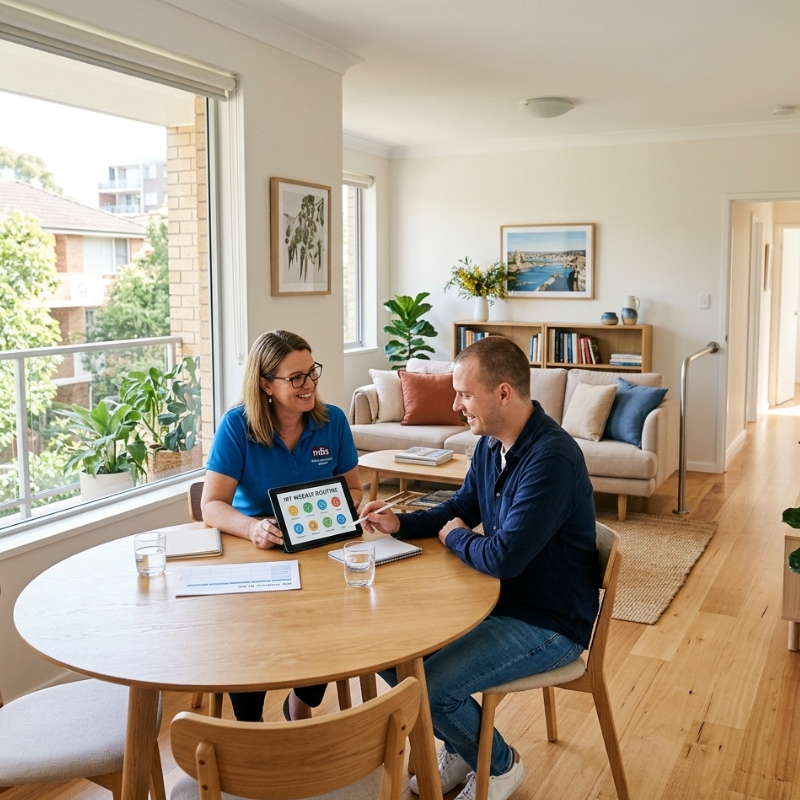
• A short “week in my life” description showing where support is required
A simple “week in my life” structure
You can outline:
• Morning routine: what you can do vs what needs support
• Daytime: appointments, work/study, transport and fatigue
• Evening: meals, personal care, safety, routines
• Night-time: supervision needs, wandering risk, seizures, anxiety
• Weekends: community participation and social connection
This becomes powerful because it explains why a certain support level is necessary.
Q&A: What do I say if my living situation is “fine” but not sustainable?
Try: “It’s currently working because of unpaid support, family burnout, or informal workarounds, but it’s not sustainable long-term. Here’s what would happen without those supports.” Then show concrete examples.
When people aren’t sure how to translate tenancy stress into NDIS-friendly language, getting help with accommodation and tenancy can clarify what to document and how to frame support needs without turning it into a housing-cost conversation.
Common Scenarios in Melbourne (and Who Does What in Each)
Scenario 1: Private rental, living alone, struggling with routines
What’s happening:
• The lease is in your name
• You’re missing meals, forgetting medications, and falling behind on cleaning
• Neighbours complain about noise or visitors
Who does what:
• Housing system: lease rules, complaints process, property condition
• NDIS: supports that reduce risk (routine support, skill-building, supports to manage visitors safely)
• Participant/coordinator: document issues and request plan adjustments if needed
• Provider: deliver routine supports, build skills, track progress
Scenario 2: Living with family, carer burnout rising
What’s happening:
• Family supports a lot of daily needs
• Stress and conflict are increasing
• You want more independence without losing safety
Who does what:
• NDIS: can fund supports to reduce reliance on unpaid carers and build independence
• Participant/coordinator: identify which supports can be formalised
• Provider: deliver supports that progressively increase independence
• Housing system: not directly involved unless a move is planned
Scenario 3: Shared living, mismatched housemates
What’s happening:
• Personalities clash, routines conflict
• Safety concerns rise
• The environment becomes stressful
Who does what:
• NDIS: supports that help manage daily living, routines, and safety
• Coordinator: problem-solve, adjust supports, document risks for review if required
• Provider: implement strategies, communicate about compatibility and support needs
• Housing system: tenancy rules and property issues (if relevant)
Scenario 4: Discharge from hospital, urgent housing instability
What’s happening:
• You’re medically ready to discharge
• Housing is not safe or stable
• Support needs have changed
Who does what:
• Hospital team: discharge planning
• NDIS: may need urgent plan review discussions if support needs increase
• Coordinator: coordinate evidence, services, and risk mitigation
• Housing system: separate pathway, but can intersect with short-term supports and safety planning
How to Tell If Your Home and Living Supports Are Working
Supports aren’t just about “having hours.” They’re about outcomes.
Signs it’s working:
• Your routines are more consistent (meals, hygiene, medication)
• Your home stays safe and manageable
• Tenancy stress decreases (fewer complaints, fewer crises)
• You’re participating in the community more
• Unpaid carer load reduces without increasing risk
Signs you may need a review or adjustment:
• Repeated incidents at home
• Escalating anxiety or unsafe behaviours in the home environment
• Frequent tenancy warnings or conflicts
• Changes in mobility, health, or cognition
• Unplanned hospital admissions related to living situation
If you’re seeing these signs, gathering evidence early (incident notes, support worker notes, allied health letters) can make a big difference.
Questions to Ask Before You Commit to a Home and Living Pathway
These questions help you avoid being pushed into a “one-size-fits-all” option:
• What support do I need at different times of day (morning, evening, overnight)?
• Do I need active support, prompting, or supervision?
• What risks exist in my current setup (falls, medication, visitors, wandering)?
• What type of home environment helps me regulate (quiet, low sensory, close to transport)?
• What would make this living situation sustainable for 12–24 months?
• What evidence do I need to strengthen my next planning conversation?
If you want a practical “next step” page to keep handy while you’re mapping responsibilities and supports, this accommodation and tenancy guidance can help you connect day-to-day tenancy issues back to the types of supports that may stabilise your situation.
FAQ
What’s the main difference between Home and Living supports and housing?
Home and Living supports are disability-related supports that help you live safely and independently. Housing is the physical place you live (rental, community housing, family home) and is usually managed through mainstream housing systems.
Can the NDIS help me find a place to live?
Sometimes the NDIS can fund supports that help you find and maintain suitable housing if it relates to your disability needs and is reasonable and necessary. It won’t usually fund the rent itself.
What’s the difference between SIL and SDA?
SIL is supported (assistance with daily tasks and supervision) in your home, commonly in shared living. SDA is the specialist housing itself for eligible participants with extreme functional impairment or very high support needs.
Can I have SIL if I live alone?
In some circumstances, yes. The focus is on the supports you need and what’s reasonable and necessary, not just the household type.
Does Home and Living mean I have to move into a group home?
No. Home and Living can include many arrangements: living alone, with family, with housemates, or in a more structured shared environment. The right option depends on your goals, safety needs, and preferences.
What should I bring to my planning meeting about Home and Living?
Bring a clear description of your daily routines and support needs, plus evidence like OT reports, incident notes, and any relevant allied health or medical documentation. A “week in my life” summary is often very effective.
What if my current housing is unsafe or breaking down?
Document what’s happening (incidents, risks, tenancy issues), tell your support coordinator (if you have one), and gather evidence from allied health. If safety is immediate, use urgent services first, then follow up with plan conversations supported by evidence.
)
&description=&image=https://ahsancareprovider.com.au/wp-content/uploads/2026/05/NDIS-Home-and-Living-Supports-Explained-Who-Does-What-and-Whats-Actually-Funded.jpg)